
Focused therapeutic pressure

Deep Tissue Massage in Centreville, VA

Deep tissue massage at Miracle Hands uses slower, firmer pressure for guests who want focused work on everyday muscle tension in the back, shoulders, hips, legs, or neck. Open daily from 9:30 AM to 9:30 PM at 14200 G Centreville Square, Centreville, VA 20121.

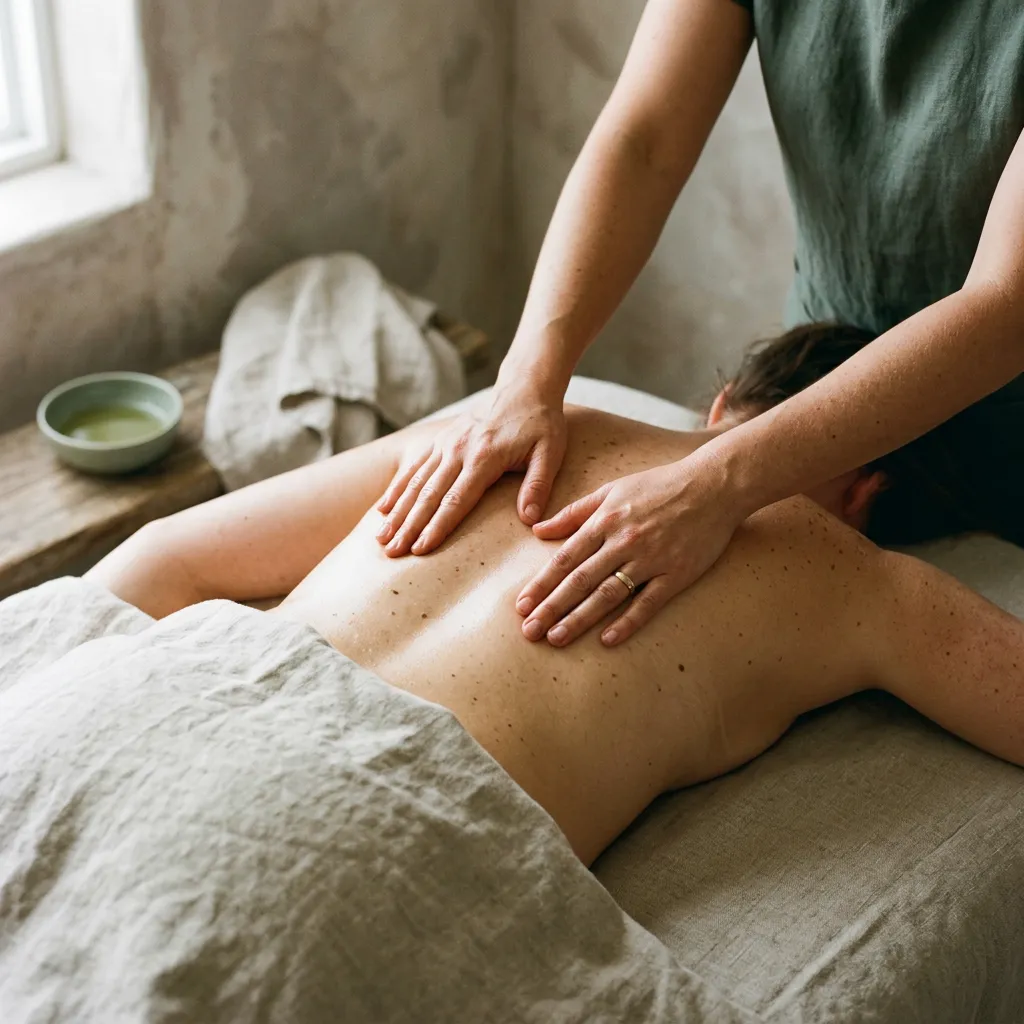
Deep tissue back massage session at Miracle Hands in Centreville, VA

Deep tissue, at a glance

The questions guests ask on the phone before booking firm-pressure work, answered before the long version.

  • Price: $55 / $80 / $120 / $160 for 30 / 60 / 90 / 120 minutes, with complimentary hot stones.
  • Same price as Swedish — the difference is pace and pressure, not cost.
  • Usual focus areas: shoulders, upper back, low back, hips, legs and the base of the neck.
  • Firm pressure should feel productive, never sharp. It is adjustable at any point in the session.
  • Book 30 minutes for one area, 60 for a full-body pass with focused time, 90 or 120 to do both unhurried.
  • Not a medical treatment. Tell your therapist about injuries, conditions and medications before you start.

Deep tissue is a technique, not a pain tolerance test. Here is how firmer pressure actually works, why soreness is not a scorecard, and what to say on the table — a plain-language guide to deep tissue massage in Centreville, VA.

The technique

What deep tissue is — and what it is not.

Ask five people what deep tissue means and you will get five answers, most of them some version of 'Swedish, but harder.' That is not quite it. Deep tissue is a slower technique — long, deliberate strokes and sustained pressure that works gradually into deeper layers of muscle, giving tissue time to respond instead of forcing it. The National Center for Complementary and Integrative Health's massage overview lists it among the most common styles, distinct from lighter relaxation-focused work. Depth here is a method, not a volume knob.

What deep tissue is not: an endurance event. At Miracle Hands, a 60-minute deep tissue massage in Centreville, VA runs $80 and still moves through the whole body — the firmer, focused work lands on the areas you flag, usually shoulders, lower back, hips, or calves. Complimentary hot stones can warm a stubborn spot before the slower pressure begins. Where depth helps, your therapist uses it. Where it does not, they skip it.

The pain myth

No pain, no gain? Not on a massage table.

The 'no pain, no gain' idea is stubborn, and on a massage table it is backwards. When pressure tips from intense into painful, most bodies do something automatic: they brace. Shoulders creep up, breathing goes shallow, and the very muscles the therapist is trying to reach tighten in self-defense. Past that point, more force mostly buys you more guarding. A productive level of pressure feels strong and specific — you notice it, you can breathe through it, and you do not dread the next stroke.

Some guests feel mildly sore the day after a firm session, similar to the ache after a good workout, and that usually fades on its own. Fine. But soreness is a side effect, not a scorecard, and chasing it is how people end up bruised and skeptical. If firm pressure simply never appeals to you, nothing is wrong with you — a lighter stress relief massage may help with relaxation and everyday muscle tension without any of the intensity.

The best deep tissue work is slow and specific — deep enough to matter, never so deep you brace against it.

Speaking up

How to talk about pressure without feeling awkward.

Plenty of first-timers stay silent on the table because they do not want to seem fussy or insult the therapist. Please be fussy. Pressure preference is personal, and it shifts by body area — shoulders that welcome an elbow may sit next to a neck that wants half that force. Before the session starts, name your top one or two priority areas and how you like pressure in each. During the session, short words work best: firmer, lighter, stay there, skip that spot.

None of this is being difficult — it is how the session is supposed to run. NCCIH's consumer tips on massage encourage exactly this kind of plain communication with your therapist about comfort and pressure. Our therapists check in as they work; answer honestly rather than politely. 'A little less' said in minute ten beats a tense hour and a regretful drive home on Route 29.

The evidence

What research actually says about firm pressure.

Firm pressure sells itself, so it is worth checking what the studies actually back up. NCCIH's guide to chronic pain and complementary health approaches notes that massage has been studied for problems like low-back pain and neck pain, with some evidence of short-term relief — but the studies are often small, methods vary, and benefits tend to fade without follow-up. The agency's research digest on massage therapy, written for health providers, reaches a similar verdict: promising in places, rarely definitive.

That is not a reason to skip the table — it is a reason to hold realistic expectations. A deep tissue session in Centreville is a reasonable way to work on everyday muscle tension and, for many people, to feel meaningfully looser for a while. It is not a treatment, and no spa should imply otherwise. If pain is ongoing, worsening, or unexplained, see a clinician first; massage can sit alongside medical care, never in place of it.

Booking it

Trying deep tissue at Miracle Hands.

The logistics are deliberately simple. Miracle Hands sits in the Centreville Square plaza at 14200 G Centreville Square, with parking a few steps from the door, and the studio is open every day from 9:30 AM to 9:30 PM — weekends and holidays included. There is no online booking system to wrestle with: call (571) 380-6868, say you want deep tissue massage in Centreville, and mention your problem areas so we can plan your time. Walk-ins are welcome whenever a therapist is free. Thirty minutes ($55) suits a single stubborn area; 60 minutes ($80) is the sensible first full-body session; 90 or 120 minutes buys unhurried time for back, hips, and legs together.

If firm is not it

When deep tissue is the wrong tool .

Firm pressure suits a specific set of complaints. If your week does not match that description, one of these is probably the better booking.

Hot stone massage

Warmth does part of the loosening, so the therapist works effectively without pressing as hard. The usual pick for guests who find deep tissue too intense.

Neck and shoulder massage

When everything is in the upper back and shoulders, 30 focused minutes beats an hour spread across the whole body.

Stress relief massage

Lighter pressure, slower pace, steam eye mask. For weeks that were mentally long rather than physically hard.

Fire cupping add-on

A $30 traditional add-on that pairs with deep tissue back work. Mention it when you call — not every therapist offers it.

Quick facts

Simple, local, open daily.

Price
Deep tissue massage: $55 / $80 / $120 / $160 for 30 / 60 / 90 / 120 minutes.
Hours
Daily, 9:30 AM to 9:30 PM.
Area
Centreville, Virginia, plus Chantilly and Fairfax and Clifton.

Who books firm pressure

Who firm pressure actually suits.

Deep tissue is not the strongest item on a menu of escalating intensity — it is a different technique with a different pace. It fits some complaints well and others badly.

  • Guests who prefer firm, deliberate pressure rather than a light relaxation session.
  • Desk workers, drivers, gym-goers, and busy parents with everyday shoulder, back, or hip tightness.
  • People who want a session that can blend full-body flow with focused time on priority areas.

On the table

Say something early, not afterwards.

How to steer the pressure without feeling rude

Deep tissue should feel steady and useful, not painful; tell your therapist if pressure needs to change.

For one focus area, 30 minutes can work. For full back, shoulders, hips, and legs, choose 60 minutes or longer.

Hydrate, move gently afterward, and avoid treating post-massage soreness as proof that deeper is better.

The Centreville location suits guests who want firm therapeutic massage without a complicated booking process — most drive in from Chantilly or Fairfax, some from as far as Manassas. If you are unsure what to book, call (571) 380-6868 and describe what you want from the session.

Curious how the styles compare? The related guides further down this page walk through pressure, pricing, and who each session suits — or skim the full menu on the services page .

Evidence-aware

What the evidence will and will not support.

FAQ

Before you book.

What is deep tissue massage? +

A full-body massage worked slower and firmer than Swedish, layer by layer, with more of the session spent on the areas that hold everyday tension. The technique is about pace and depth of contact rather than force — a good deep tissue therapist works patiently, not hard.

Is deep tissue massage supposed to hurt? +

No. Firm pressure can feel intense and slightly uncomfortable in a tight spot, but it should never be sharp, burning or numbing, and you should not be bracing against it. Speak up the moment it tips over; pressure can be changed in seconds.

How much pressure should a deep tissue massage use? +

Enough that you notice it and can still breathe normally. A useful gauge: on a scale of one to ten, aim for a six or seven. Anything that makes you hold your breath or tense up is working against the session rather than for it.

Should I book 30, 60 or 90 minutes of deep tissue? +

Thirty minutes covers one area properly — a back, a pair of shoulders. Sixty is the standard full-body pass with time to linger where it matters and the right default for a first visit. Ninety and 120 let the therapist come back to a stubborn area a second time without shortchanging anything else.

Is deep tissue massage good for desk workers? +

It is one of the most common reasons guests book it. Long desk stretches load the upper traps, the base of the neck and the low back, and firm slow work through those areas is what a 60-minute session is for. Tell your therapist how your workstation is set up — it usually explains where the tightness sits.

Is deep tissue good after training or gym work? +

Many active guests book it between hard sessions, and pressure and focus are adjusted to the muscle groups your training actually loads. It is not treatment for an injury: if something is injured, see a clinician first and tell your therapist what they advised.

Do you offer deep tissue massage near Chantilly and Fairfax? +

The studio is in Centreville Square, a short drive from both. Chantilly guests usually come south on Route 28; Fairfax guests take Route 29 or I-66. Drive time varies with traffic, so call ahead and confirm the slot before you set off.

Will I be sore the next day? +

Mild soreness for a day is common after firm work, a bit like the day after unfamiliar exercise. It is not a scorecard — a session that leaves you sore for three days was too aggressive, not more effective. Drink water, move gently, and ask for lighter pressure next time.

Is massage a replacement for medical care? +

No. Massage may help with relaxation and everyday muscle tension, but it is not a substitute for diagnosis, treatment, or urgent care. If you have a health condition, recent injury, severe pain, or pregnancy-related concerns, please check with a medical professional first and tell your therapist before the session begins.

— Continue exploring

Related guides & city pages.

— Or jump straight to

The full service menus.

Come see us in Centreville.